
Sydney car owners combat airborne salt, pollen, and road grit between professional details. A weekly rinse with fresh water removes corrosive coastal residue before it etches clear coat. Glitz Detailing recommends a pH-neutral wash for painted surfaces, protecting the investment until the next premium mobile service. When your car needs more than a quick wash, the Glitz Detailing Extreme Clean brings car detailing in Sydney to your driveway.
Key Takeaways
- A weekly fresh water rinse removes corrosive coastal residue before it etches clear coat.
- Saltwater and airborne sea spray etch clear coat if left on the surface for 24 to 48 hours.
- A waterless wash uses high-lubricity polymers to lift dust and fingerprints without rinsing.
- Sand acts as a fine abrasive that grinds contaminants deeper into the finish with every touch.
What do you need to maintain your car between details?
Maintaining a vehicle between professional car detailing Sydney appointments requires the right tools and a disciplined approach. A waterless wash product serves as an effective maintenance tool for lightly soiled, protected vehicles. This method saves time and conserves water while preserving the finish.
What is the safest way to remove light dust between washes?
A waterless wash relies on high-lubricity polymers to lift dust and fingerprints without rinsing. The formulation encapsulates particles, allowing a clean microfiber towel to wipe them away without scratching the clear coat. This technique suits vehicles with only light surface contamination.
When should a waterless wash be avoided?
Waterless wash is unsuitable for gritty or heavily contaminated surfaces. Mud, sand, and caked-on road grime demand a full pressure wash to prevent paint damage. Skipping this precaution risks embedding abrasive particles into the finish during the wipe-down.
For Sydney owners seeking mobile car detailing Sydney services, Glitz Detailing deploys filtered water systems and professional-grade equipment to every job. The company’s steam cleaning systems and commercial-grade setup handle contamination that a waterless wash cannot safely address. Between appointments, clients should follow these steps:
- Inspect the paint for bonded contaminants like sap or tar before any product application.
- Use a high-lubricity waterless wash only on panels with light dust or fingerprints.
- Wipe in straight lines with a plush microfiber towel, turning to a clean face frequently.
- Schedule a full detail immediately if grit or heavy soiling is present.
Water spots on car surfaces develop quickly in Sydney’s coastal environment. A waterless wash provides no protection against mineral deposits left by rain or irrigation. Professional filtered water systems help prevent this risk during a full detail. Consistent between-detail care preserves the gloss and extends the life of protective coatings.
How does salt air and sand affect your car’s paint?
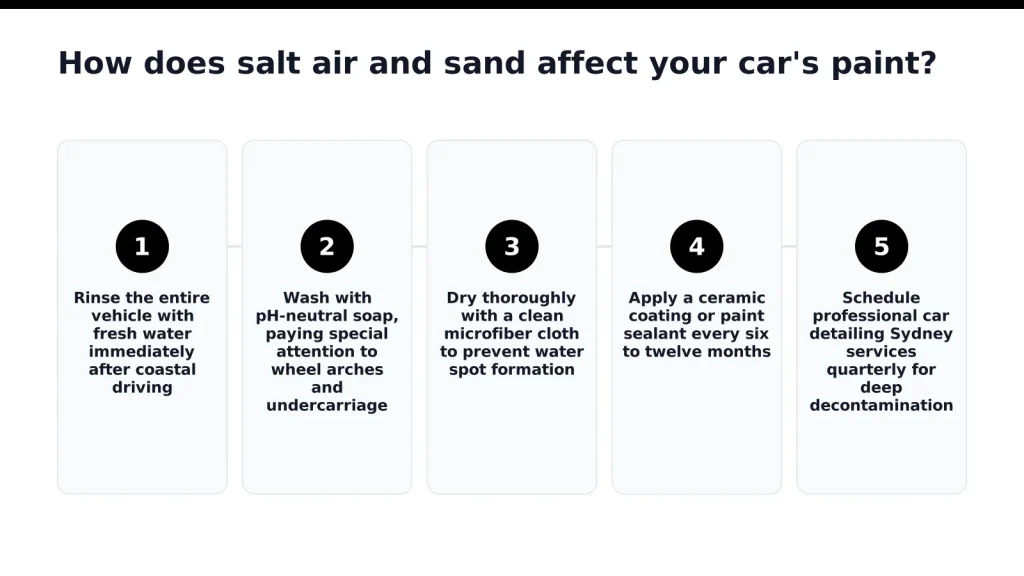
Salt air and sand create a dual threat to automotive paint. Saltwater and airborne sea spray corrode bare metal and etch clear coat if left on the surface. The damage begins almost immediately. Saltwater accelerates the corrosion process in ways plain water cannot. A vehicle parked near Sydney’s Northern Beaches or Eastern Suburbs coastlines faces constant exposure. Microscopic salt crystals settle into the clear coat. They draw moisture from the air and begin chemical etching long before visible rust appears. Sand compounds the problem. Wind-blown particles scour the surface, creating micro-scratches that trap more salt residue.
How quickly does salt damage car paint?
Salt damage starts within hours of exposure. The Protect Your Car From Saltwater: Coastal Care Guide confirms that saltwater and airborne sea spray are corrosive to bare metal and etch clear coat if left on the surface. In Sydney’s humid coastal climate, this process accelerates. A vehicle left unrinsed after a beach trip develops clear coat etching within 24 to 48 hours. The damage is cumulative. Each exposure deepens existing imperfections until professional paint correction becomes necessary.
How can you protect coastal car paint?
Routine maintenance is critical to having a long-lasting vehicle. A thorough fresh water rinse within 24 to 48 hours of any beach exposure removes salt before it bonds. Following the rinse, a wash with pH-neutral soap cleans wheels and undercarriage aggressively. A ceramic coating maintained on painted surfaces slows chemical etching between washes. For Sydney car owners, a mobile car detailing Sydney service using filtered water reduces the risk of water spots on car surfaces that tap water leaves behind. Filtered water rinses leave minimal mineral residue, which matters when salt already stresses the clear coat.
Car care tips for coastal protection follow a clear sequence:
- Rinse the entire vehicle with fresh water immediately after coastal driving
- Wash with pH-neutral soap, paying special attention to wheel arches and undercarriage
- Dry thoroughly with a clean microfiber cloth to prevent water spot formation
- Apply a ceramic coating or paint sealant every six to twelve months
- Schedule professional car detailing Sydney services quarterly for deep decontamination
Sand demands its own precautions. Never wipe a dry, sandy panel. The grit scratches clear coat instantly. A pressure washer or strong hose stream lifts sand particles away before any contact wash begins. For vehicles regularly parked near Sydney beaches, a filtered-water wash provides an added layer of protection against the mineral deposits that accelerate salt etching.
What is the safest way to wash your car at home?
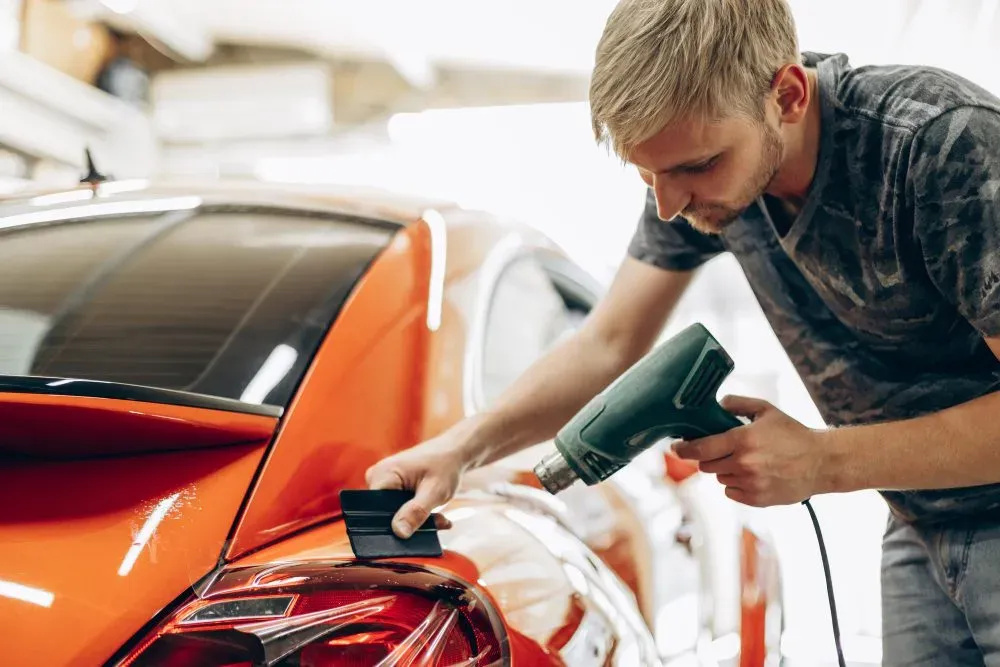
The safest home wash method for a lightly soiled vehicle is a waterless wash. This technique uses high-lubricity polymers to lift contamination without rinsing. A traditional hose-and-bucket wash risks grinding grit into clear coat. Waterless wash eliminates that danger when performed correctly.
Car care tips for Sydney’s coastal suburbs must account for salt-laden air and fine construction dust. A waterless wash removes these contaminants in roughly 15 minutes. A conventional wash takes close to an hour. Speed matters because airborne salt spray begins etching clear coat within 24 to 48 hours of exposure, according to getundrdog.com.
What equipment is needed for a waterless wash?
A quality waterless wash product and multiple clean microfiber towels are essential. Folded towels present a fresh surface with each pass. Never reuse a soiled towel face on paint.
How does waterless wash prevent paint damage?
The spray-on, wipe-off method relies on polymer encapsulation. High-lubricity polymers lift dust, fingerprints, pollen, and fresh bird droppings off paint without a drop of rinse water. Proper technique and timing are crucial to avoid paint damage and ensure safe, eco-friendly vehicle care. Rushing the process or using a single towel for the entire vehicle introduces swirl marks.
For Sydney car owners dealing with heavier contamination, a professional mobile car detailing Sydney service provides deeper decontamination. Glitz Detailing offers bug and tar removal plus de-ironisation to dissolve embedded metal particles. These services address what a waterless maintenance wash cannot. Water spots on car surfaces also demand attention. Sydney’s hard water leaves mineral deposits that bond to clear coat. A filtered-water rinse during professional detailing helps prevent this etching.
How can you prevent water spots on your car in Sydney?
Preventing water spots on car surfaces in Sydney requires a two-part strategy. The first step eliminates the minerals that cause spots before they touch the paint. The second step creates a barrier that stops any remaining contaminants from etching into the clear coat.
What causes water spots on cars in coastal Sydney?
Sydney’s coastal environment accelerates water spot damage. Airborne salt spray and hard tap water both leave mineral deposits on vehicle surfaces. When these deposits dry in the sun, the minerals bond to the paint. Without intervention, the residue etches the clear coat within days. A mobile car detailing Sydney service that uses filtered water helps prevent this risk at the source.
Step-by-step prevention for Sydney car owners
- Rinse with filtered water only. Standard tap water across Sydney’s North Shore and Northern Beaches contains dissolved minerals. Glitz Detailing uses a custom-built mobile studio trailer with triple-filter water filtration. This system strips minerals from the water before it touches any vehicle surface. No minerals means minimal spots.
- Dry immediately after every wash. Even filtered water can pool and attract airborne contaminants. A thorough hand-dry with a clean microfiber towel removes standing water before salt or pollen settles into it.
- Apply a protective coating to all exterior glass and paint. Glitz Detailing offers glass coating services that seal windscreens and windows against mineral adhesion. A maintained ceramic coating on painted surfaces slows chemical etching between washes, according to the Coastal Care Guide from getundrdog.com.
- Schedule regular maintenance details. Coastal vehicles accumulate salt spray and industrial fallout continuously. Consistent professional attention prevents contamination from building up to damaging levels.
Can ceramic coatings stop water spots permanently?
No coating makes a vehicle immune to water spots. A ceramic coating creates a hydrophobic surface that sheds water quickly. This reduces the contact time between mineral-laden droplets and the clear coat. The coating also provides a sacrificial layer. Etching attacks the coating rather than the paint underneath. Glitz Detailing delivers results at the client’s location with filtered water and professional-grade coating applications. The combination of filtered water and a maintained protective layer gives Sydney car owners the strongest defence against permanent spot damage.
How does mobile detailing help prevent water spots?
A fixed-location car wash often uses unfiltered municipal water. The vehicle dries in the sun during the drive home. Spots form before the owner can intervene. A mobile car detailing in Sydney service that arrives with its own filtered water supply changes this equation. The entire process happens in a controlled sequence at the client’s property. The vehicle stays shaded. The rinse water contains minimal minerals. The drying step follows immediately. This mobile approach, detailed further in the company’s mobile car detailing in Sydney, removes the window of vulnerability that creates water spots in the first place.
When should you call a professional mobile detailer?
Professional mobile detailing becomes essential when contamination, damage, or neglect exceeds what routine washing can safely address. A mobile car detailing Sydney specialist brings equipment and techniques directly to the vehicle’s location, reducing the risk of improper cleaning methods causing permanent surface defects. Glitz Detailing delivers these results across Sydney’s North Shore, Northern Beaches, and Eastern Suburbs.
What problems require a detailer instead of a car wash?
Three specific conditions demand professional intervention. First, embedded contamination such as industrial fallout, rail dust, or brake particles requires chemical decontamination with iron removers and clay bar treatment. Standard washing cannot dissolve these bonded particles. Second, paint defects including swirl marks, oxidation, and light scratches need machine polishing with precise pad and compound combinations. Third, interior issues like mould growth, deep-set stains, or persistent odours require steam cleaning and extraction equipment that reaches beyond surface cleaning.
A deep Interior Detail, Paint Correction Service, mould remediation, or contamination removal requires additional time and specialised equipment. Attempting these corrections without proper tools and training often worsens the damage. Paint correction performed incorrectly burns through clear coat. Mould remediation without commercial-grade steam systems leaves spores embedded in fabric and foam.
How do you know interior problems need professional attention?
Visible mould colonies, musty odours that persist after airing out the cabin, and stains that have set into fabric or carpet signal the need for professional-grade intervention. Glitz Detailing offers interior detailing and steam cleaning services that address these deep issues. Steam cleaning reaches temperatures that sanitise surfaces and kill mould spores. Extraction equipment removes contaminated moisture rather than pushing it deeper into seat foam and carpet backing.
What exterior damage requires immediate professional correction?
Water spots on car surfaces that remain after washing indicate mineral etching in the clear coat. These deposits bond to paint when water evaporates, leaving calcium and magnesium rings that cut into the finish. Bird droppings and bug splatter create similar acid-etching within 48 hours of contact. Paint correction services remove these defects through controlled abrasion that levels the clear coat without compromising its thickness. Glitz Detailing provides paint correction as part of its mobile service range, bringing the necessary equipment to the vehicle rather than requiring a workshop visit.
FAQ
When should I avoid using a waterless wash?
Waterless wash is unsuitable for gritty or heavily contaminated surfaces like mud, sand, and caked-on road grime.
Conclusion
Maintaining a clean car between professional details in Sydney’s coastal conditions requires a disciplined routine of filtered rinses, immediate drying, and protective coatings. When contamination or damage exceeds what safe washing can address, booking a mobile detailing specialist with equipment and filtered water becomes the decisive step to preserve your vehicle’s finish. For car detailing near me on the North Shore, Northern Beaches or Eastern Suburbs, book an Extreme Clean on 0458 99 22 90.