Knowledge Items
Is Mould Inside a Vehicle Dangerous?
Customers commonly ask whether mould contamination inside a vehicle can affect health, odours, or long-term interior condition.
Is Mould Inside a Vehicle Dangerous?
Mould exposure may contribute to allergies, respiratory irritation, unpleasant odours, and ongoing contamination issues, particularly for sensitive individuals. Significant mould contamination should be professionally assessed and treated.
What causes mould in cars?
Mould in cars is usually caused by excess moisture combined with poor ventilation, warm temperatures, and organic material such as dust, food particles, or fabric fibres. Once moisture becomes trapped inside a vehicle, mould spores can begin growing on carpets, seats, roof linings, air vents, and other interior surfaces.
Common causes of car mould include water leaks, wet carpets, leaving windows open during rain, flooded floor areas, beach gear, damp towels, drink spills, poor drainage, blocked sunroof drains, and vehicles being left unused for long periods. Sydney’s humid and coastal conditions can also increase the likelihood of mould developing inside a vehicle.
In many cases, the visible mould is only part of the problem. Moisture can remain trapped underneath carpets, inside seat foam, or within ventilation systems, allowing mould smells and contamination to continue returning if the underlying cause is not addressed.
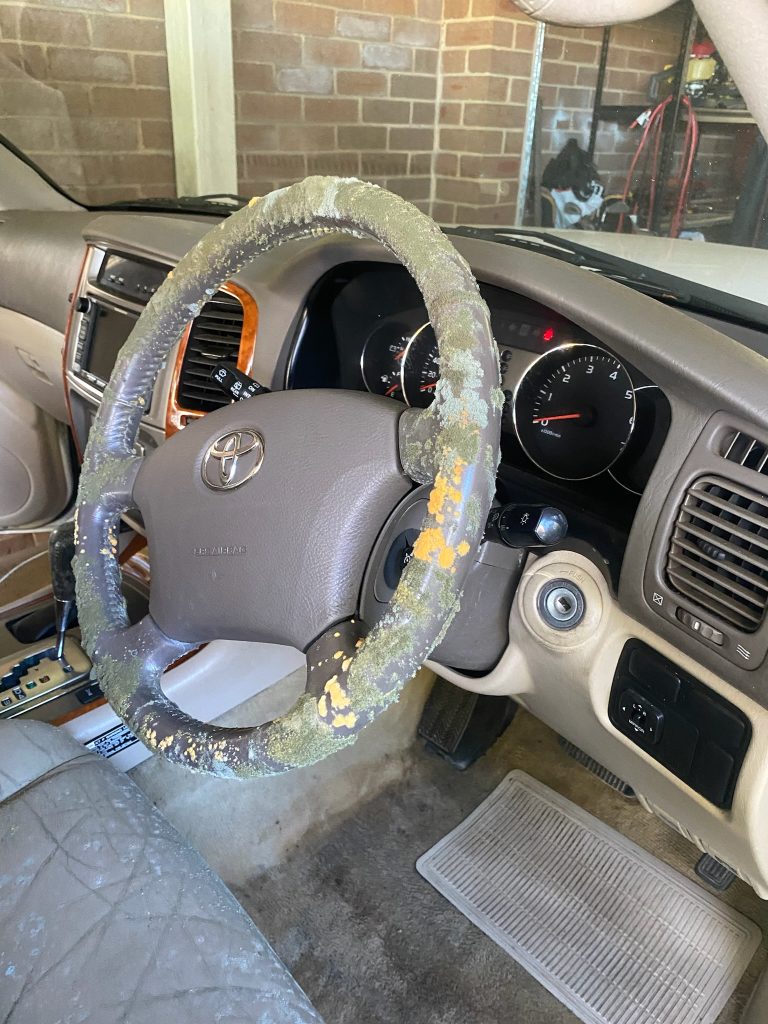
Mould Growth Inside Vehicle
Mould inside a vehicle is commonly caused by trapped moisture, water leaks, poor ventilation, flooded carpets, or damp organic material left inside the cabin.
Mould may spread through carpets, seats, roof linings, insulation, and ventilation systems if not treated promptly.